
The phrase "Maache-Bhaate Bangali" is widely recognized as a symbol of the Bengali identity. Literally meaning "a Bengali of fish and rice," it represents far more than a dietary habit. It reflects the deep-rooted cultural, historical, and emotional bond that Bengalis share with fish and rice, which have been at the heart of our cuisine and way of life for generations.
Although rice is our staple food, fish is an inseparable part of our daily diet. It is truly difficult to find a Bengali who does not enjoy eating fish. Personally, fish is one of my favorite foods. I especially love indigenous small fish because of their unique taste and high nutritional value. Besides these, our national fish, hilsa, along with shrimp, carp, and many other freshwater species, occupies an important place on our dining table. As a riverine country, Bangladesh depends heavily on its rivers and wetlands. Here, fish is much more than a source of food; it is an integral part of our agriculture, culture, nutrition, livelihoods, and socio-economic development. Anyone who has grown up in a rural area can easily relate to this reality. Alongside professional fishermen, many farmers also catch fish from canals, wetlands, and other natural water bodies to meet their family's daily food needs.
Some of my most cherished childhood memories revolve around fishing. Whenever I visited my maternal grandparents' home, I would go fishing in nearby canals and wetlands with my uncles and cousins. At that time, those water bodies were teeming with fish. Along with small indigenous species, we could easily catch snakehead, climbing perch, spotted snakehead, freshwater prawns, and many other native fish. We never fished for a living; it was simply a source of joy, adventure, and childhood excitement. Even today, those memories remain among the happiest moments of my life. In several northern districts of Bangladesh, special fairs centered around fish are organized, popularly known as "Jamai Mela". According to local tradition, large fish are displayed and sold at these fairs, and newly married sons-in-law or visiting relatives are usually the main buyers. Although I have never had the opportunity to attend one, I hope to visit such a fair someday. These unique folk traditions remind us that fish is not merely food, it is a living symbol of our culture, heritage, and rural way of life.
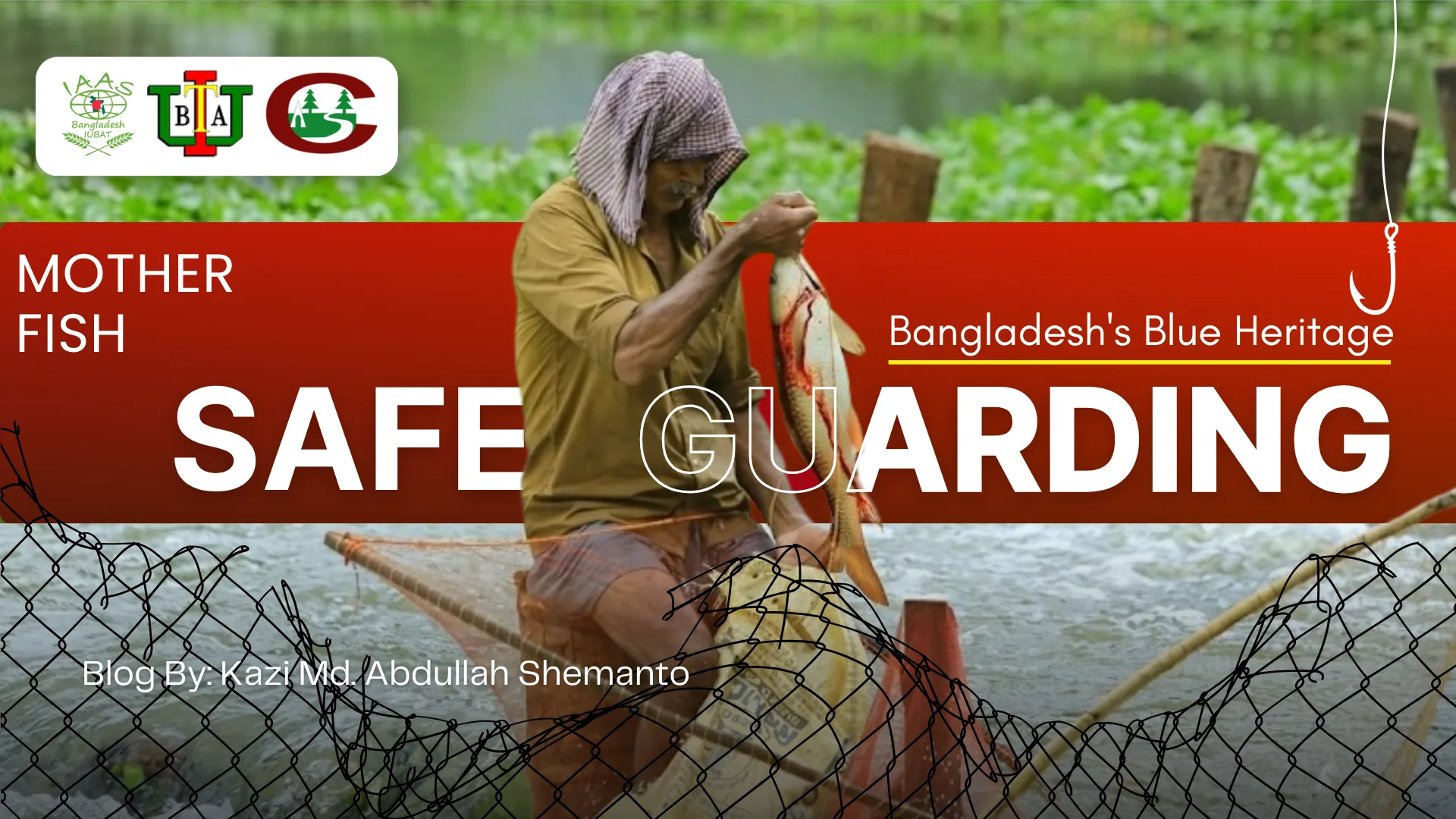
Bangladesh currently ranks second in the world in inland freshwater fish production, fifth in aquaculture production and fourteenth in marine fish production. This is undoubtedly a remarkable achievement and a source of great national pride. However, there is growing concern over how long this success can be sustained. One of the greatest threats is the illegal harvesting of brood fish during their breeding season, which poses a serious risk to the future of the country's fisheries.
The consequences of this practice extend far beyond the fisheries sector. It threatens food and nutritional security, aquatic biodiversity, environmental sustainability, rural livelihoods, and the agricultural economy as a whole. As a child, I remember seeing an abundance of fish in the canals, floodplains, and wetlands around my village. Today, even during the peak fishing season, those same water bodies no longer support the rich fish populations they once did. This decline is not only visible to me but is also a growing concern among local communities. Therefore, taking effective measures to protect brood fish and raising public awareness have become urgent priorities for ensuring the sustainable management and conservation of Bangladesh's fisheries resources.
To appreciate the importance of protecting brood fish, we must first understand what the term means. In fisheries science, a brood fish (commonly referred to as a mother fish) is a mature female fish capable of producing eggs and giving rise to the next generation. During the breeding season, egg-bearing female fish found in natural water bodies are known as brood fish. In other words, they are the foundation of future fish populations. Unfortunately, this vital resource is now under serious threat. In Bangladesh, most indigenous fish species breed during the monsoon season, generally between April and July, although the exact timing varies among species. Major carp species such as rohu, catla, and mrigal usually spawn during the monsoon, while hilsa has its primary breeding season in September and October. These periods are crucial for the natural replenishment of fish stocks.
Regrettably, some unscrupulous fishermen illegally catch brood fish during these critical breeding seasons. They often use prohibited fishing gear, including current nets (monofilament gill nets), fine-mesh nets, and seine nets, which indiscriminately trap breeding fish. In many cases, egg-bearing fish are openly sold in local markets. As a result, millions of eggs are lost before they have the chance to hatch, severely disrupting the natural reproductive cycle and reducing the future population of indigenous fish. Protecting brood fish is therefore essential for sustaining fish production in the long run. Without successful natural reproduction, maintaining healthy fish populations will become increasingly difficult. This makes it important to examine Bangladesh's recent fish production trends.

According to the Department of Fisheries (DoF), Bangladesh, the country produced 4.503 million metric tons of fish in the 2019–20 fiscal year. Production increased to 4.621 million metric tons in 2020–21, representing a 2.69% growth over the previous year. In 2021–22, production rose by nearly 3%, reaching 4.759 million metric tons. The upward trend continued in 2022–23, when Bangladesh achieved a record 4.914 million metric tons, an increase of 3.3% compared with the previous fiscal year. Although total fish production reached 5.018 million metric tons in 2023–24, the growth rate declined to 2.1%. In other words, production is still increasing, but at a slower pace than before. Several factors have contributed to this slowdown, including the illegal harvesting of brood fish during the breeding season, the destruction of natural spawning habitats, water pollution, overfishing, and the growing impacts of climate change. Among these, the indiscriminate harvesting of brood fish remains one of the most alarming threats to the long-term sustainability of Bangladesh's fisheries. The impact of brood fish harvesting on fish production, agriculture, biodiversity, and the national economy can be clearly understood by looking at the production trend of hilsa, Bangladesh's national fish.

According to the Department of Fisheries (DoF), Bangladesh, hilsa production stood at 550,000 metric tons in the 2019–20 fiscal year, recording a growth rate of 3.23%. In 2020–21, production increased to 565,000 metric tons, although the growth rate slowed to 2.73%. In 2021–22, hilsa production reached 567,000 metric tons, with a marginal growth of only 0.25%. The following year, 2022–23, production rose slightly to 571,000 metric tons, reflecting a growth rate of 0.84%. However, the most alarming situation emerged in 2023–24, when hilsa production declined sharply to 529,000 metric tons, representing a negative growth rate of 7.83%. This means that both total production and the growth rate fell significantly compared with the previous year.
A similar pattern can also be observed in the Halda River, the world's only natural breeding ground for major carp species. In recent years, both natural spawning and egg collection have shown considerable fluctuations and signs of decline. Illegal harvesting of brood fish during the breeding season, environmental degradation, water pollution, and other human-induced pressures have all contributed to this situation. These challenges clearly indicate that sustainable fisheries cannot be achieved without protecting brood fish.
If mature breeding fish continue to be harvested indiscriminately, the natural production of fish fry will gradually decline. Consequently, the populations of indigenous fish species, including the major carps, will continue to decrease. Hatcheries may also face shortages of high-quality brood stock, eggs, and fry, ultimately affecting aquaculture production across the country. The consequences extend far beyond the fisheries sector. Fish is one of the primary sources of animal protein for the people of Bangladesh. A decline in fish production would threaten national food and nutritional security. Since fisheries is a vital sub-sector of agriculture, any long-term decline would also have a negative impact on the country's agricultural development and overall economy.

Reduced fish production would also directly affect the livelihoods of millions of fishermen and fish farmers. Lower catches mean lower incomes, greater economic uncertainty, and rising market prices. As fish becomes more expensive, many families particularly those with limited incomes may struggle to afford this important source of nutrition. Another serious consequence of brood fish depletion is the loss of aquatic biodiversity. It disrupts the natural food chain and ecological balance of rivers, wetlands, and other aquatic ecosystems. Numerous aquatic organisms that depend on these ecosystems are also affected. Over time, many indigenous fish species may become endangered or even disappear from their natural habitats, posing a significant threat to Bangladesh's rich aquatic biodiversity.
Protecting brood fish, therefore, is not simply about conserving a single group of fish. It is about ensuring the long-term sustainability of the country's fisheries, strengthening food and nutrition security, protecting biodiversity, supporting agriculture, and maintaining economic stability for future generations. To address this growing crisis, Bangladesh must adopt effective and long-term measures without delay. One of the most important steps is to completely prohibit the harvesting of brood fish during their breeding season while ensuring adequate support and alternative livelihood opportunities for fishing communities.
For most fishermen, fishing is not merely an occupation; it is their primary source of income. Therefore, imposing seasonal fishing bans alone cannot provide a sustainable solution. During the breeding season, the government, in collaboration with non-governmental organizations and development partners, should provide food assistance, financial incentives, easy access to credit, and alternative employment opportunities. Such support would help fishermen cope with temporary income losses, encourage compliance with conservation laws, and significantly reduce the illegal harvesting of brood fish. At the same time, existing laws and regulations concerning the protection of juvenile hilsa (jatka) and brood fish must be enforced more effectively. Strict legal action should be taken against those who continue to use prohibited fishing gear or engage in illegal fishing during restricted periods for the sake of short-term profit.
Equally important is the conservation of natural aquatic habitats. Expanding fish sanctuaries, controlling water pollution, maintaining the natural flow of rivers, and restoring spawning and breeding grounds are all essential for sustaining healthy fish populations. Without protecting these ecosystems, long-term fisheries conservation will remain difficult. Public awareness is another key element of successful conservation. The responsibility of protecting brood fish does not rest solely with fishermen or those directly involved in the fisheries sector. Every citizen has a role to play. Educational institutions, mass media, social media platforms, and community organizations should work together to educate people about the importance of conserving brood fish and maintaining healthy aquatic ecosystems. Greater public awareness can inspire responsible behavior and strengthen community participation in conservation efforts.

In conclusion, protecting brood fish is not simply about saving individual fish. It is about safeguarding Bangladesh's future fisheries, ensuring food and nutritional security, preserving biodiversity, supporting agriculture, and strengthening the national economy. Every responsible decision we make today can contribute to a more sustainable future for the next generation.
Let us, therefore, stand together to protect our brood fish and our aquatic resources. By raising awareness, respecting conservation laws, and supporting sustainable fishing practices, we can help secure Bangladesh's rich fisheries heritage for generations to come. Only through the collective efforts of the government, local communities, fishermen, researchers, and ordinary citizens can we ensure the long-term sustainability of our country's invaluable fisheries resources.

General Member of IAAS Bangladesh IUBAT. Collage of agricultural Sciences, IUBAT-International University of Business Agriculture and Technology.
Related articles
Aug 09, 2026
Mushroom: The Hidden Nutritional Umbrella
Sacrificing the cozy sleep of a rainy weekend morning, we set out for an educational visit to the National Mushroom Deve...
Jul 22, 2026
The Silent Killer in Our Wetleads
There are some places that never really leave us. No matter how far we travel or how busy life becomes, they continue to...
May 26, 2026
Why Agriculture Needs Young Minds?
About 1 billion people depends on Agriculture for their livelihood which means about 27 - 28 % people of total world pop...